
What Is a Request for Proposal (RFP)?
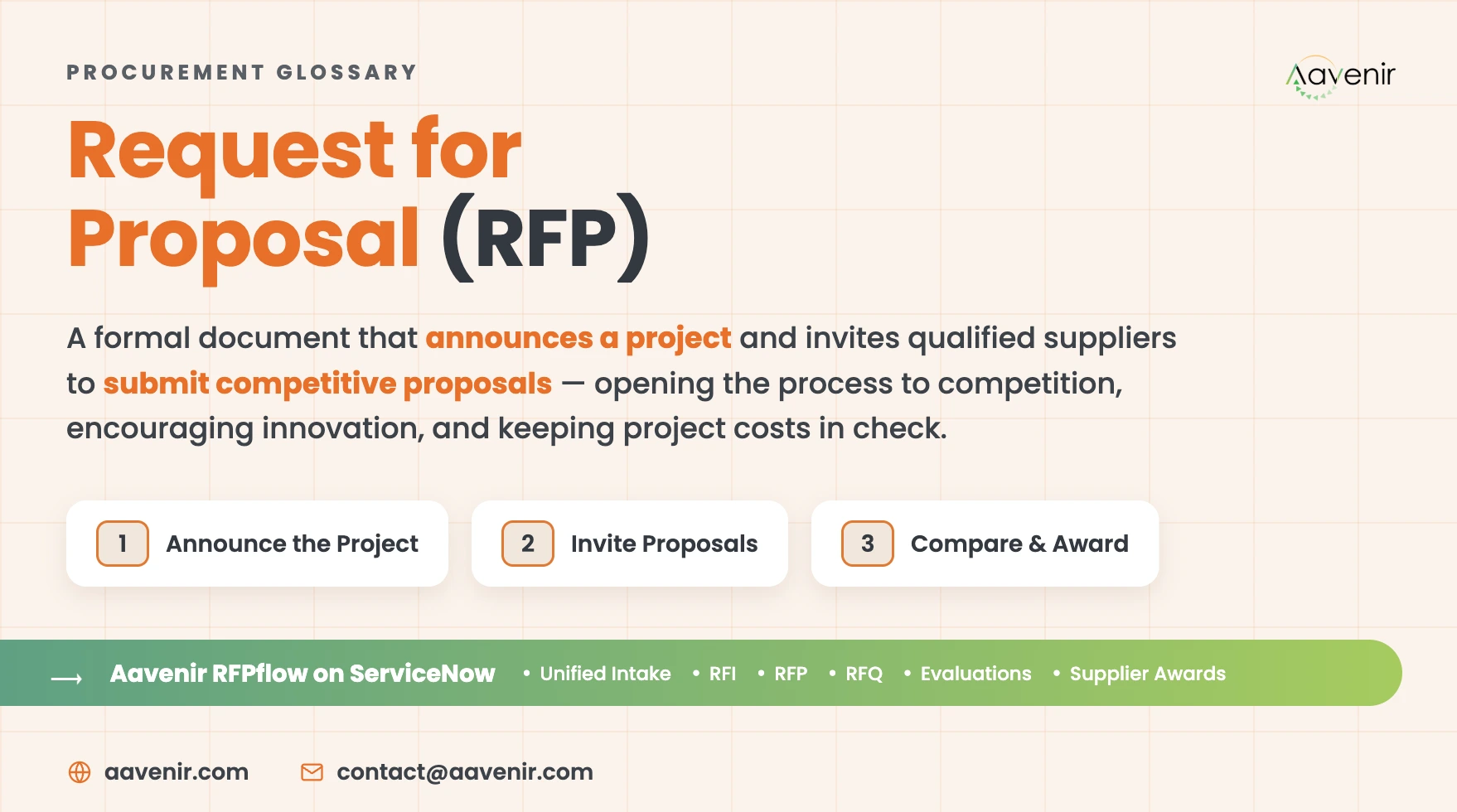
A Request for Proposal (RFP) is a formal procurement document that invites qualified suppliers to propose solutions to a defined business need, including their approach, capabilities, pricing, timeline, and commercial terms.
Organizations use an RFP when the purchase is complex enough that selecting a supplier should not be based on price alone. It creates a structured, comparable process for evaluating potential vendors across solution fit, implementation approach, experience, risk, service levels, commercial value, and other criteria that matter to the business.
What Is the Purpose of an RFP?
The purpose of an RFP is to help an organization identify the supplier that can provide the best overall solution, not simply the lowest price.
A well-designed RFP gives suppliers enough context to propose a relevant solution while giving the buyer a consistent basis to compare responses. It brings structure to sourcing decisions that involve multiple stakeholders, competing priorities, technical requirements, commercial risk, implementation dependencies, or long-term supplier relationships.
An RFP can help organizations:
- Define the business problem before engaging suppliers.
- Create a fair and repeatable supplier-selection process.
- Compare supplier capabilities beyond pricing.
- Encourage suppliers to offer innovative or differentiated approaches.
- Reduce bias by using predefined evaluation criteria.
- Document decision-making for governance, audit, and compliance purposes.
- Improve collaboration between procurement, business, finance, legal, IT, security, and other stakeholders.
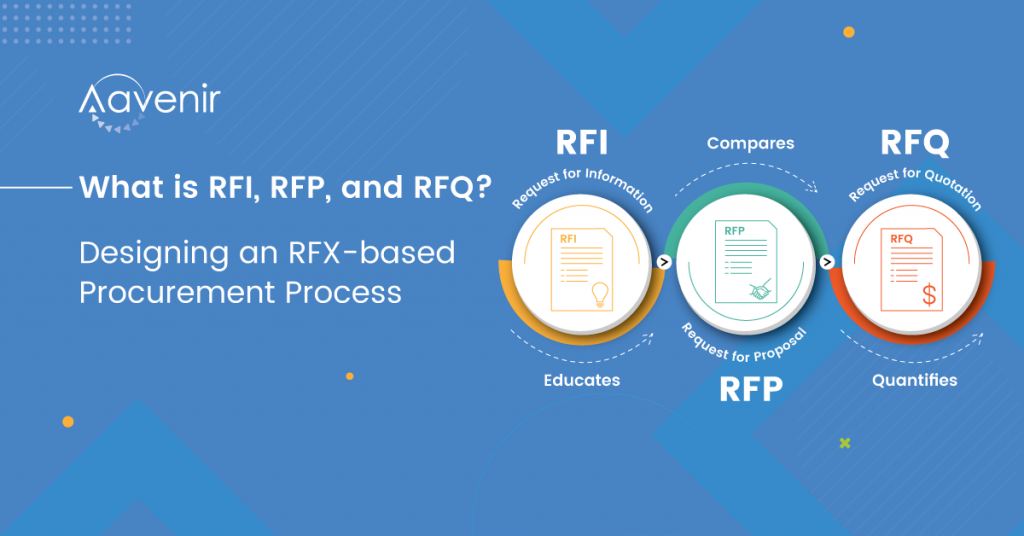
RFP vs. RFQ vs. RFI: What Is the Difference?
RFP, RFQ, and RFI are all common procurement documents, but they serve different purposes during the sourcing process.
|
Criteria |
RFP: Request for Proposal |
RFQ: Request for Quotation |
RFI: Request for Information |
|
Purpose |
To evaluate supplier solutions, approach, capabilities, pricing, and overall fit |
To obtain pricing and commercial quotations for clearly defined goods or services |
To gather market, supplier, capability, or solution information before a formal sourcing event |
|
When to use |
When requirements are complex, strategic, outcome-based, or not fully standardized |
When specifications are clear and price is a primary decision factor |
When the organization is still exploring options or defining requirements |
|
Evaluation focus |
Solution quality, implementation approach, experience, risk, service, pricing, and value |
Price, delivery terms, quantity, quality specifications, and commercial terms |
Supplier capabilities, market options, emerging technologies, and potential approaches |
|
Typical outcome |
Selection of a preferred supplier or shortlist for negotiation |
Selection of the most competitive quote that meets the specifications |
Better-informed requirements, supplier shortlist, or decision to launch an RFP or RFQ |
|
Level of detail required from supplier |
High |
Moderate |
Low to moderate |
In simple terms, use an RFI to learn, an RFP to evaluate solutions, and an RFQ to compare prices for a defined requirement.
When to Use an RFP
An RFP is most useful when the organization needs more than a standard product or a straightforward price comparison.
Common trigger scenarios include:
1. The requirement is complex or outcome-based
Use an RFP when the business knows the problem it needs to solve but wants suppliers to propose the best approach. For example, selecting a contract lifecycle management platform, managed services provider, cybersecurity partner, consulting firm, or enterprise software solution.
2. Multiple evaluation factors matter beyond price
An RFP is appropriate when the decision depends on factors such as supplier capability, implementation methodology, customer references, technology fit, integration capability, service levels, risk profile, innovation, and long-term value.
3. The purchase is high-value, strategic, or high-risk
Large investments, critical business systems, regulated services, major outsourcing engagements, and supplier relationships with material operational impact usually require a formal RFP process.
4. Stakeholder alignment and governance are important
An RFP helps when procurement needs input from several functions, such as IT, legal, finance, security, operations, compliance, and business leadership. It creates a documented process for collecting requirements, scoring proposals, and supporting the final award decision.
What Should an RFP Include?
The exact structure of an RFP varies by category and organization. However, most effective RFPs include the following sections.
1. Company Background and Business Context
This section introduces the issuing organization, the business environment, and the reason for the sourcing event. It helps suppliers understand the broader context behind the requirement.
Include information such as:
- Company overview.
- Business unit or department issuing the RFP.
- Current environment or operating model.
- Challenges to be addressed.
- Strategic objectives for the initiative.
2. Scope of Work
The scope of work explains what the supplier is expected to deliver. It should define the required services, products, workstreams, deliverables, responsibilities, and expected outcomes.
A strong scope of work should clarify:
- What is included.
- What is excluded.
- Required deliverables.
- Expected service levels.
- Key dependencies.
- Customer and supplier responsibilities.
3. Functional and Technical Requirements
This section outlines the specific capabilities the supplier or solution must provide. Requirements may include business, functional, technical, integration, security, reporting, compliance, and support needs.
Requirements should be prioritized where possible, for example:
- Mandatory requirements.
- Preferred requirements.
- Optional or future-state requirements.
4. Implementation Timeline and Milestones
Suppliers need clarity on the expected schedule, including key dates for proposal submission, supplier presentations, selection, contract award, implementation, testing, and go-live.
This section may include:
- RFP issue date.
- Supplier question deadline.
- Proposal due date.
- Evaluation period.
- Finalist presentations.
- Award decision.
- Contracting timeline.
- Project start date.
5. Supplier Qualification Criteria
This section defines the minimum qualifications suppliers must meet to participate. It helps the buyer avoid spending time evaluating vendors that cannot meet baseline requirements.
Typical qualification criteria include:
- Relevant industry experience.
- Financial stability.
- Geographic coverage.
- Security and compliance certifications.
- Customer references.
- Insurance requirements.
- Diversity, sustainability, or ESG criteria.
- Ability to meet contractual and service-level obligations.
6. Proposal Response Instructions
Clear response instructions make proposals easier to compare and reduce avoidable clarification cycles.
This section should specify:
- Required response format.
- Required proposal sections.
- Page limits, if applicable.
- Submission method.
- Required attachments.
- Proposal validity period.
- Contact details for questions.
- Confidentiality requirements.
- Deadline and time zone.
7. Evaluation Criteria and Scoring Methodology
The evaluation criteria explain how responses will be assessed. This improves transparency and helps suppliers focus on the factors that matter most.
Common criteria include:
- Functional fit.
- Technical architecture.
- Implementation approach.
- Industry experience.
- Customer references.
- Security and compliance.
- Service and support model.
- Commercial value.
- Total cost of ownership.
- Innovation and future roadmap.
Organizations may assign weighted scores to each criterion. For example, solution capability may account for 30%, implementation approach 20%, commercial value 20%, supplier experience 15%, and security or risk 15%.
8. Pricing and Commercial Requirements
The pricing section should explain how suppliers are expected to present their commercial proposal. A structured pricing template helps procurement compare suppliers fairly.
It may include:
- One-time implementation fees.
- Subscription or license fees.
- Professional services fees.
- Managed services fees.
- Optional services.
- Volume-based pricing.
- Price escalation assumptions.
- Payment terms.
- Discounts.
- Total cost of ownership over a defined period.
9. Contractual Terms and Conditions
Many RFPs include standard commercial, legal, security, privacy, data-protection, and contractual requirements. Providing these early helps identify major issues before the selection process is complete.
The 7-Step RFP Process
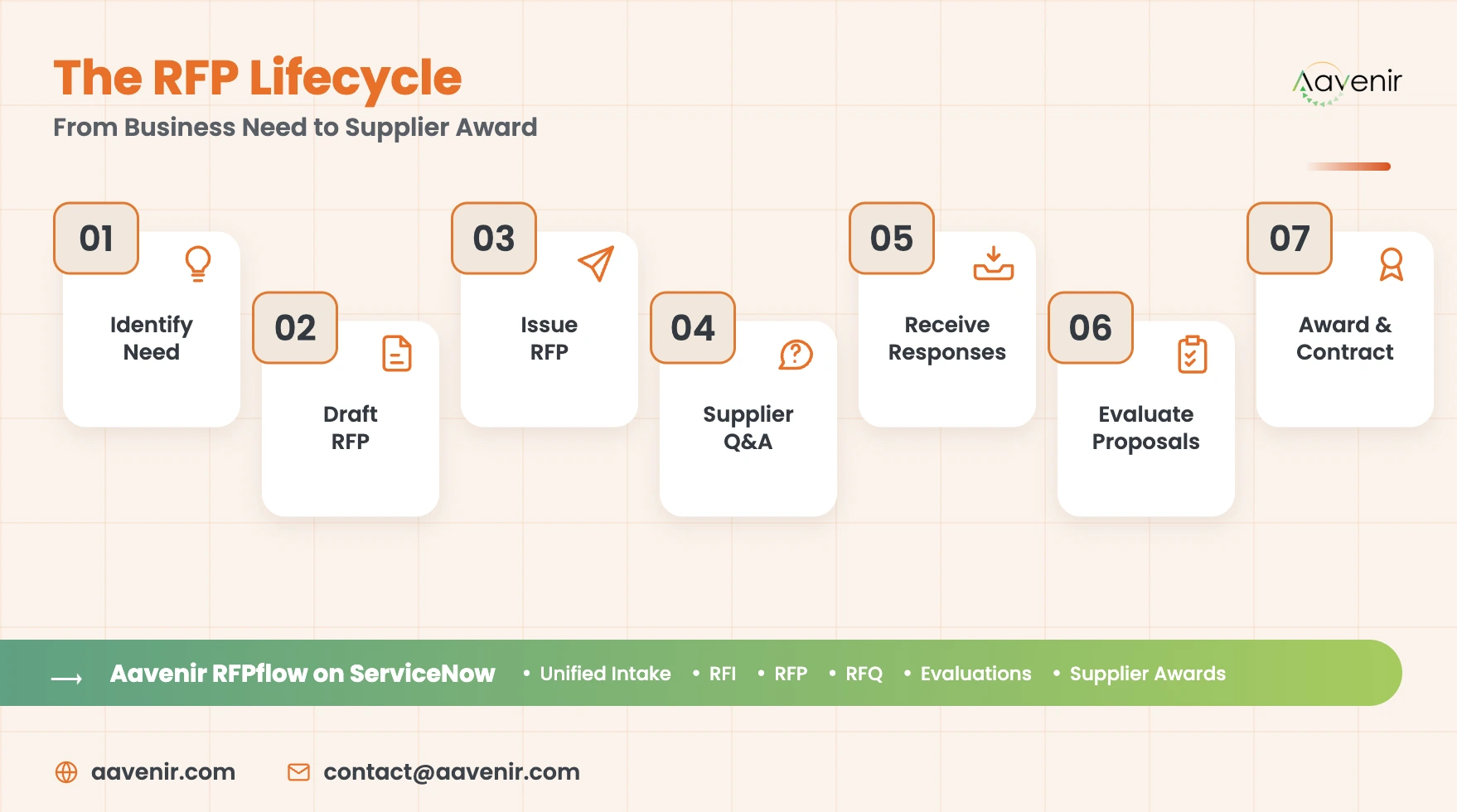
A disciplined RFP process helps organizations move from a business need to a defensible supplier selection decision.
Step 1: Identify the Need
The process begins when the organization identifies a business problem, capability gap, supplier need, or strategic initiative that requires external support.
At this stage, stakeholders should define:
- The problem to be solved.
- Desired business outcomes.
- Budget assumptions.
- Key stakeholders.
- Procurement category.
- Risks and dependencies.
- Whether an RFP is the right sourcing method.
Step 2: Draft the RFP
Procurement and business stakeholders work together to create the RFP document. The draft should combine business requirements, technical requirements, commercial requirements, supplier questions, evaluation criteria, and process timelines.
The strongest RFPs are developed collaboratively rather than written by procurement alone.
Step 3: Issue the RFP
The RFP is issued to a selected supplier list or published more broadly, depending on the sourcing strategy.
Before issuing the RFP, organizations should confirm:
- Supplier eligibility.
- Internal approval to launch.
- Evaluation team availability.
- Scoring methodology.
- Communication process.
- Submission deadlines.
- Supplier confidentiality requirements.
Step 4: Manage Supplier Questions and Answers
Suppliers may need clarification on the scope, requirements, timeline, commercial assumptions, or evaluation process.
A structured Q&A process ensures that all participating suppliers receive consistent information. This helps preserve fairness and reduces the risk of one supplier receiving an unfair advantage.
Step 5: Receive Supplier Responses
Suppliers submit their proposals by the deadline using the required format. Procurement should validate that responses are complete before evaluation begins.
At this stage, the team may check for:
- Required documents.
- Pricing templates.
- Signed declarations.
- Compliance responses.
- References.
- Security documentation.
- Acceptance of key contractual terms.
Step 6: Evaluate and Shortlist Suppliers
The evaluation team reviews supplier responses against the predefined scoring criteria. Many organizations use weighted scorecards to combine input from procurement, business stakeholders, IT, security, finance, legal, and operations.
This stage may include:
- Proposal scoring.
- Supplier demonstrations.
- Technical workshops.
- Reference checks.
- Due diligence.
- Risk assessments.
- Negotiations.
- Best and final offer requests.
Step 7: Award and Contract
Once the preferred supplier is selected, the organization moves into final commercial negotiation, contract review, approvals, and award.
The RFP process should not end at supplier selection. Procurement should capture lessons learned, document the award rationale, and ensure that the final contract reflects the commitments made during the proposal process.
RFPs often involve many stakeholders, suppliers, deadlines, documents, evaluations, and approvals. Without a structured process, teams can lose visibility into supplier communications, miss deadlines, struggle to compare responses, or create inconsistent audit records.
RFP management helps organizations:
- Centralize supplier communications.
- Standardize questionnaires and templates.
- Track sourcing-event milestones.
- Manage supplier submissions.
- Coordinate internal evaluators.
- Capture scorecards and feedback.
- Maintain an audit trail.
- Improve reporting and sourcing-cycle visibility.
- Reuse approved content and prior sourcing templates.
Aavenir RFPflow is RFP management software built on ServiceNow that helps procurement teams manage RFP creation, supplier communications, response collection, evaluations, approvals, and sourcing-event governance in one connected workflow.
Benefits of an RFP
A well-structured RFP helps procurement teams move beyond price-only comparisons and make supplier decisions based on business value, capability, risk, and long-term fit.
1. Creates a More Consistent Supplier Selection Process
An RFP gives every participating supplier the same requirements, response format, deadlines, and evaluation criteria. This makes it easier to compare proposals fairly and reduces reliance on informal or subjective decision-making.
Aavenir RFPflow helps teams standardize sourcing events using configurable RFx templates, reusable questionnaires, and structured evaluation workflows.
2. Improves Cross-Functional Collaboration
Complex sourcing decisions often involve procurement, finance, legal, IT, security, business owners, and leadership. An RFP creates a common framework for collecting requirements, reviewing supplier responses, and capturing stakeholder input.
With Aavenir RFPflow, internal teams can collaborate on RFP authoring, assign evaluation tasks, manage approvals, and track open actions within ServiceNow workflows.
3. Helps Identify the Best Overall Value, Not Just the Lowest Price
The lowest-priced supplier is not always the best choice. An RFP allows buyers to evaluate broader factors such as solution fit, implementation approach, supplier experience, service levels, security, innovation, and total cost of ownership.
Aavenir RFPflow supports weighted scoring so buyers can assess supplier responses against the criteria that matter most for each sourcing event.
4. Reduces Manual Work and Administrative Delays
Without structured RFP software, procurement teams often rely on spreadsheets, email chains, shared folders, and manually consolidated scorecards. This creates avoidable rework and makes it harder to track progress.
Aavenir RFPflow centralizes supplier invitations, response collection, evaluation activity, milestones, approvals, and sourcing-event documentation in one platform.
5. Strengthens Governance and Auditability
For high-value, strategic, or regulated purchases, organizations need to demonstrate how supplier decisions were made. A formal RFP process creates a documented record of requirements, supplier communications, evaluator scores, approvals, and award decisions.
Because Aavenir RFPflow is built on ServiceNow, it supports role-based access, workflow history, and centralized sourcing records that help strengthen governance and audit readiness.
6. Improves Supplier Experience and Response Quality
Clear requirements, structured response forms, centralized Q&A, and transparent deadlines make it easier for suppliers to understand what is expected and submit complete proposals.
Aavenir RFPflow helps procurement teams manage supplier communications and response collection through a more controlled, consistent sourcing process.
7. Provides Better Visibility Into Sourcing Performance
RFPs can become difficult to manage when stakeholders cannot see where an event is delayed, which suppliers have responded, or whether evaluations are complete.
Aavenir RFPflow helps teams track sourcing milestones, supplier participation, evaluation progress, and time-to-award metrics through ServiceNow-based workflows and reporting.
RFP Statistics Procurement Teams Should Know
RFP timelines vary considerably based on scope, governance, supplier market, regulatory requirements, and stakeholder availability. APQC measures sourcing-event cycle time from the point an internal need is identified through contract signature, reinforcing that RFP performance should be evaluated across the full sourcing lifecycle rather than proposal submission alone. (https://www.apqc.org/resources/benchmarking/open-standards-benchmarking/measures/average-cycle-time-days-sourcing-events)
Public-sector evidence illustrates the potential duration of complex procurements: a WMATA Inspector General audit found standard pre-award lead-time targets ranging from 30 to 180 days, while sampled procurements ranged from 190 to 654 days. These figures are not enterprise benchmarks, but they demonstrate how approvals, evaluation, negotiation, and governance can extend sourcing timelines. (https://wmataoig.gov/wp-content/uploads/2024/05/Audit-of-WMATAs-Procurement-Pre-Award-Cycle-Time-IG-Final_Redacted.pdf)
For response timelines, prioritize quality over artificial speed. Harvard Kennedy School’s Government Performance Lab notes that suppliers produce stronger proposals when given adequate time to develop thoughtful responses.
These figures should be treated as directional benchmarks rather than universal standards. A straightforward sourcing event can move quickly, while enterprise technology, professional services, outsourcing, public procurement, and regulated-category RFPs may require substantially more time.
RFP Best Practices
A strong RFP is clear enough to support fair comparison but flexible enough to allow suppliers to demonstrate their expertise.
Consider the following best practices:
Define the outcome, not only the feature list
Explain the business problem and the desired outcome. Suppliers may bring better approaches than the buyer initially anticipated.
Use clear and prioritized requirements
Separate mandatory requirements from preferred and optional requirements. This prevents suppliers from treating every line item as equally important.
Involve the right stakeholders early
Bring procurement, business owners, finance, legal, IT, security, risk, and implementation teams into the process before issuing the RFP.
Make evaluation criteria visible
Suppliers can provide more relevant responses when they understand what the buyer values most.
Avoid unnecessary complexity
Length alone does not make an RFP stronger. Focus on questions that will materially influence the selection decision.
Use a consistent scoring model
A structured scorecard reduces subjectivity and helps the organization make a more defensible award decision.
Give suppliers adequate response time
A realistic timeline improves response quality and expands the likelihood that qualified suppliers will participate.
Plan for the process after award
The selected supplier will still need to move through negotiation, contracting, onboarding, implementation, and performance governance. Align the RFP with the broader source-to-contract process.
Frequently Asked Questions About RFPs
What does RFP stand for?
RFP stands for Request for Proposal. It is a formal document used by an organization to invite suppliers to submit proposals for a specific business requirement, project, product, or service.
What is the main purpose of an RFP?
The main purpose of an RFP is to compare potential suppliers based on their proposed solution, capabilities, experience, implementation approach, pricing, commercial terms, and overall value.
When should an organization issue an RFP?
An organization should issue an RFP when the requirement is complex, high-value, strategic, risk-sensitive, or dependent on factors beyond price. Examples include enterprise software, consulting services, outsourcing, managed services, and large transformation programs.
What is the difference between an RFP and an RFQ?
An RFP evaluates the supplier’s overall solution and approach, while an RFQ is primarily used to obtain pricing for clearly defined goods or services. An RFP is usually more detailed and is used when solution quality and capability matter alongside cost.
What is the difference between an RFP and an RFI?
An RFI is used to gather information about the market, suppliers, or available solutions before a formal sourcing event. An RFP is used when the organization is ready to request detailed proposals and evaluate suppliers for selection.
Who should be involved in an RFP process?
The RFP process typically involves procurement, business stakeholders, finance, legal, IT, information security, risk, compliance, and executive sponsors. The specific group depends on the category and complexity of the purchase.
How long does an RFP process take?
An RFP process can take anywhere from a few weeks to several months. The timeline depends on the complexity of the requirement, the number of suppliers, stakeholder availability, evaluation requirements, negotiations, legal review, and approval processes.
Simplify RFP Management With Aavenir
RFPs are most effective when procurement teams can manage requirements, supplier communications, evaluations, approvals, and documentation in a single controlled process.
Aavenir RFPflow helps organizations streamline RFP management on the ServiceNow platform, giving procurement teams greater visibility, consistency, collaboration, and governance across the sourcing lifecycle.
« Back to Glossary Index