
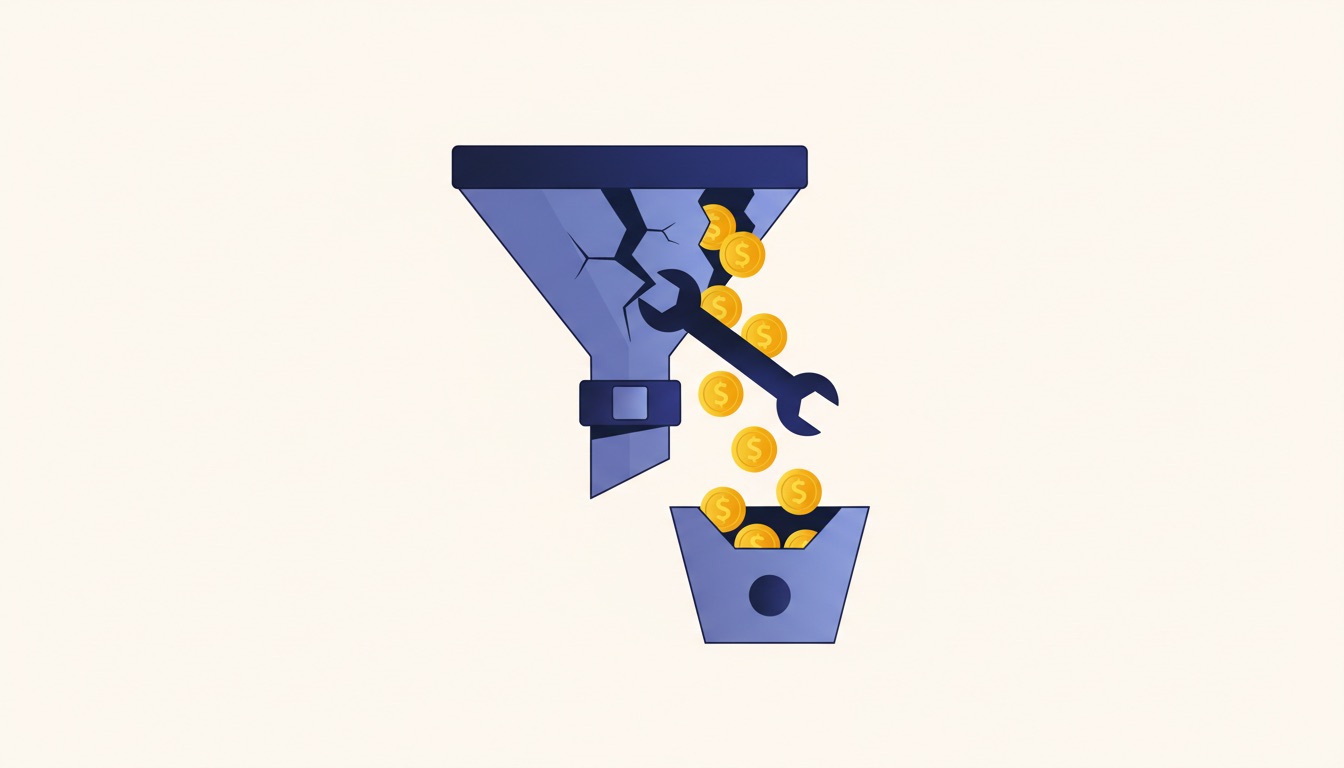
Procurement organizations are good at negotiating value and bad at collecting it. The rebate tier gets fought for line by line; the SLA penalty clause survives three redline rounds; the price-protection window is a genuine win. Then the contract is executed, filed, and the value starts leaking. Widely cited industry estimates put procurement contract leakage at around 9% of annual contract value, and roughly 40% of contracts fail to deliver their intended value.
None of that leakage is dramatic. No one decides to forfeit a rebate. It happens because roughly 70% of contract cost and risk lands after signature, exactly when contracts move from the deal team’s desk to a shared drive, and their commitments move from clauses to institutional memory.
This article maps where the value goes, then gives you the checklist: what a CLM must track after signature, and which control closes each leak.
Where does negotiated value leak?
Uncollected rebates and price breaks
Volume rebates, tiered pricing and negotiated discounts only pay out if someone tracks thresholds against actual spend. In most organizations, no one does, the rebate terms live in a PDF, the spend lives in the ERP, and the two never meet. Hard-won savings quietly leak back to suppliers every quarter.
Unclaimed SLA credits and penalties
Delivery, lead-time and service-level obligations get chased manually, if at all. When a supplier misses, the penalty or credit clause is rarely invoked, because by the time the miss is visible in operations data, nobody connects it back to the contractual remedy. Deadlines slip, penalties go unrecovered.
Expired price protections and missed warranty windows
Price-protection clauses, escalation caps and warranty terms all have windows. A warranty claim filed a month late is a dispute; filed in the window, it is a credit. Without the window on a tracked calendar with an owner, the clause you negotiated is decoration.
Auto-renewals at stale pricing
The quietest leak of all: a contract renews itself at last year’s terms because the notice date lived in a spreadsheet no one opened. Every auto-renewal at stale pricing is a renegotiation opportunity forfeited, and in a falling-cost category, it is a direct margin loss that compounds annually. The notice window is usually 60 or 90 days; by the time anyone notices, the option to act has already expired.
Every one of these leaks is the same failure in different clothing: a commitment that existed as contract language but was never converted into an owned, dated task. Spreadsheets don’t escalate. Inboxes don’t remind. Value leakage is an accountability gap, not a negotiation gap.
How do you quantify your own leakage?
Before pitching a fix, size the hole. Pull your top 20 supplier agreements by annual spend and run a one-week desk audit with procurement finance:
- Rebates: for each rebate or tiered-pricing clause, compare the contractual thresholds against actual spend for the last four quarters. Every crossed threshold without a matching credit is leakage you can put a number on.
- SLA credits: take your supplier scorecard misses for the same period and check whether the corresponding penalty or credit clause was ever invoked. It almost never was.
- Renewals: list every agreement that auto-renewed in the last year and ask whether pricing was renegotiated first. Each rollover at stale terms is a forfeited negotiation.
- Warranty: sample plant-level defect claims and check how many were recovered under contract versus absorbed as cost.
In our experience the desk audit pays for the program by itself, it converts “we should track this better” into a claimable figure that finance will fund. It also produces exactly the artifact you need next: a list of commitments that should have been tracked and were not.
The post-signature checklist
This is the minimum a CLM must track after signature. Walk your top 20 supplier agreements against this list, every item should exist as a tracked record with a named owner, a due date and an escalation path, not as a clause someone remembers. Every unchecked item is live leakage:
- ✓Rebate thresholds and price tiers, tracked against actual spend, with a named owner and a claim deadline for every tier crossing.
- ✓Delivery SLAs and lead-time commitments, each with its penalty or credit term attached, so a miss triggers a recovery action, not a shrug.
- ✓Warranty windows and remedy terms, visible to the plant and quality teams who file claims, before the window closes.
- ✓Quality specs and PPAP commitments, enforced with audit trails that stand up in supplier and quality audits.
- ✓Price-protection and escalation clauses, with expiry dates on a tracked calendar, not in a PDF.
- ✓Renewal, expiry and notice dates, every auto-renewal flagged far enough ahead to renegotiate, not just acknowledge.
- ✓Tooling ownership and return obligations, who owns the tool, how it amortizes, when it comes back.
- ✓Insurance, compliance and certificate obligations, supplier certificates current, with lapses escalated before they become audit findings.
Find the leakage in contracts you’ve already signed
Bring three executed supplier agreements and we’ll show you the rebates, credits and windows sitting untracked in them right now.
Mapping each leak to a CLM control
A checklist without a system is a better class of spreadsheet. Each leakage source has a specific control that closes it:
| Leakage source | CLM control that closes it |
|---|---|
| Uncollected rebates & price breaks | AI extraction of rebate thresholds and price tiers, tracked against activity with owners and claim deadlines |
| Unclaimed SLA credits & penalties | Automated obligation tracking with reminders and escalation, misses surface as recovery actions |
| Missed warranty claims | Warranty windows and remedy terms extracted and assigned to the teams that file claims |
| Auto-renewals at stale pricing | Renewal and notice dates on a tracked calendar with lead-time alerts routed to the category owner |
| Expired price protections | Clause-level expiry tracking with escalation before windows close |
| Deliverable & tooling disputes | Complete audit trail, every edit, approval and e-signature logged as a defensible system of record |
| Terms lost across tiers & plants | One AI-searchable repository with full metadata, version history and instant retrieval |
Notice what is not on the control list: more people. None of these controls is a headcount request. They are the same procurement, quality and finance teams you already have, working from extracted, owned, escalating obligations instead of PDFs and memory. That is why obligation tracking is usually the fastest-payback component of a CLM program, the value it recovers was already negotiated and already yours.
Making it operational
Three moves turn the checklist into a running program. First, extract what you already signed: AI and NLP can sweep your executed and legacy portfolio and surface every rebate threshold, SLA term and warranty window that was never tracked, this usually uncovers claimable value in the current period, which is how the program funds itself. The mechanics are covered in our obligation management datasheet.
Second, give every obligation an owner and an escalation path. An obligation without a named owner is a wish. Delivery SLAs belong to supply chain, rebate claims to procurement finance, warranty windows to plant quality, and each miss escalates automatically instead of waiting for a quarterly review to notice.
Third, fix the upstream process so new contracts arrive pre-tracked. When intake, clause libraries and AI review are in place, every newly executed agreement enters the repository with its obligations already extracted and assigned, the full roadmap is in our supplier contract automation guide. Manufacturers running this model report contract cycles up to 5× faster and 100% of obligations tracked to closure, which is another way of saying the value they negotiate is the value they collect.